Recap:
• Cabinet refinishing restores existing cabinet surfaces through cleaning, repair, and a new finish, avoiding the cost and waste of full replacement.
• Well-executed refinishing can last many years when cabinet boxes are structurally sound.
• Charlottesville, VA homeowners weigh refinishing against painting and replacement based on cabinet material, budget, and timeline.
Cabinet refinishing restores the look of existing kitchen or bathroom cabinets by cleaning, repairing, and resurfacing them rather than tearing them out and starting over. It typically costs less than full replacement and can be completed in days rather than weeks, making it a practical option for homeowners who want updated cabinetry without a gut renovation.
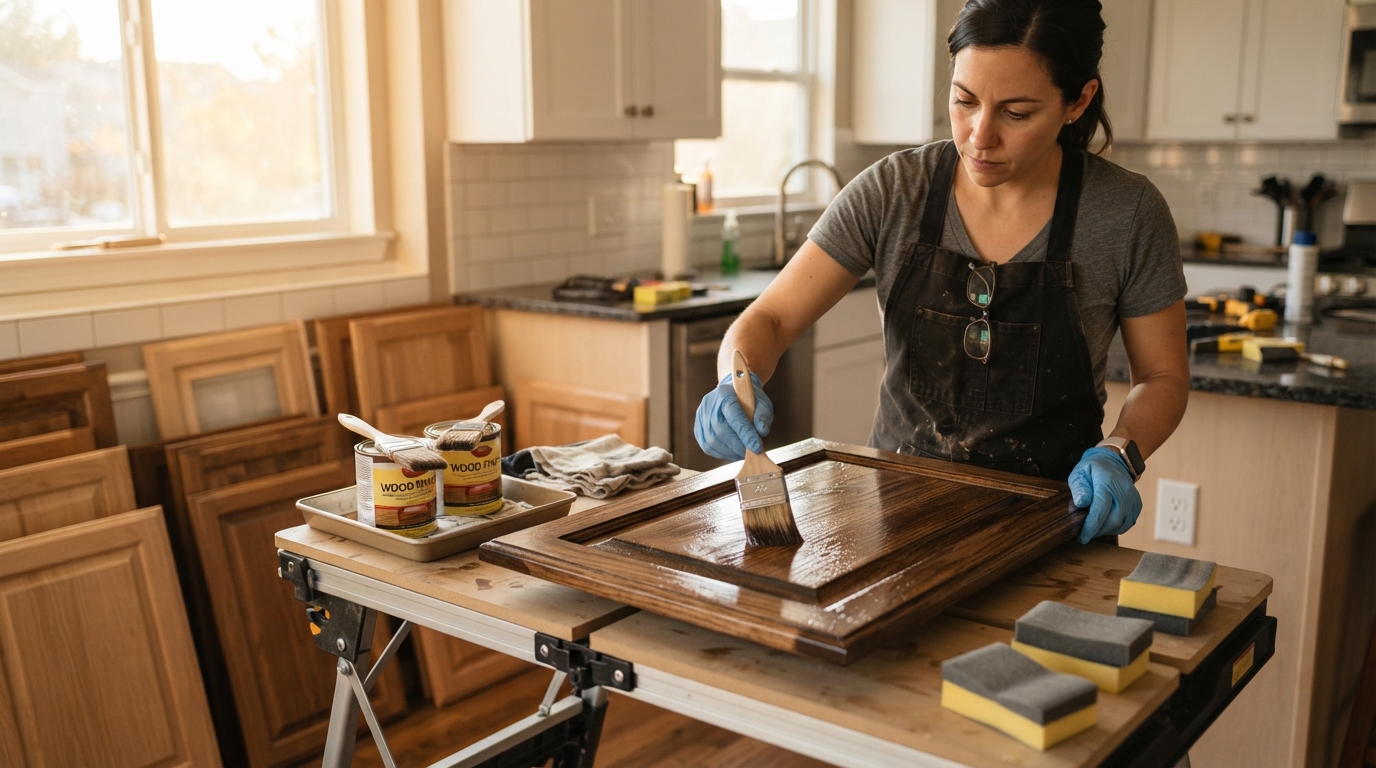
Cabinet Refinishing in Charlottesville VA works best on solid wood cabinet boxes that are structurally sound but showing cosmetic wear such as dulled finish, minor scratches, or dated color. The process generally involves degreasing the surfaces, repairing small imperfections, and applying a new finish coat that renews the wood rather than masking it with paint. Homeowners in Charlottesville, VA often consider this approach when cabinet frames and doors are in good shape but the surface finish no longer matches current kitchen or bathroom styling.
How Cabinet Refinishing Compares to Other Options
Choosing between refinishing, painting, and full replacement depends on the cabinet material, budget, and how long the homeowner plans to stay in the home. Each path addresses a different combination of cost, durability, and appearance.
| Option | Typical Cost Range | Best For | Key Limitation |
| Refinishing | Moderate | Solid wood cabinets with good structure | Not suitable for laminate or thermofoil surfaces |
| Painting | Lower | Budget-focused color changes | More prone to chipping over time without proper prep |
| Full Replacement | Highest | Cabinets with structural damage | Highest cost and longest project timeline |
Refinishing works only on real wood, since the process relies on the existing grain and surface to hold the new finish properly. Painting offers more color flexibility and a lower upfront cost but generally requires more frequent touch-ups on high-contact surfaces like door edges and handles. Full replacement remains the only reliable fix when cabinet boxes have water damage, warping, or other structural problems that refinishing or painting cannot resolve.
What the Refinishing Process Typically Involves
A professional refinishing project follows a consistent sequence regardless of the specific product line used. Understanding each step helps homeowners set realistic expectations for the project.
• Surface cleaning and degreasing to remove cooking residue and buildup
• Light sanding or surface preparation to help the new coating adhere
• Repair of minor dents, scratches, or worn spots in the wood
• Application of a new stain, sealant, or protective topcoat
• Reinstallation of doors, drawers, and hardware once the finish cures
Ventilation matters during any refinishing project because finishes and coatings can release volatile organic compounds while curing. The EPA’s guidance on VOCs during remodeling notes that many finishes, including paints and varnishes, can off-gas in varying amounts over time, which is one reason low-emitting products and proper airflow are recommended during interior projects. Homeowners in older Charlottesville, VA homes with less mechanical ventilation may want to ask about low-VOC finish options and recommended dry times before scheduling work.
Local Considerations for Charlottesville, VA Homes
Seasonal humidity swings in central Virginia can affect how long a finish takes to cure and how it performs over time. Homes built several decades ago, common throughout Charlottesville, VA, often have solid wood cabinetry that is a strong candidate for refinishing rather than replacement, since the wood itself has typically aged well even if the surface finish has not. Based in USA, Mr. Sandless of Central Virginia serves customers across Charlottesville, VA, offering a sandless refinishing method positioned as an alternative to traditional sanding-based processes.
Mr. Sandless of Central Virginia focuses on cabinet refinishing as its primary service, applying a process designed to update cabinet surfaces without the dust and mess associated with conventional sanding methods.
Frequently Asked Questions
Does cabinet refinishing work on all cabinet types? Refinishing is generally limited to solid wood cabinets, since the process depends on the natural wood grain and structure to hold a new finish properly. Laminate, thermofoil, and some engineered surfaces typically require painting or replacement instead.
How long does a typical refinishing project take? Most refinishing projects are completed within a few days, though exact timelines depend on the number of cabinets, the finish selected, and drying or curing requirements.
Can refinishing fix damaged or warped cabinet doors? Refinishing addresses surface-level wear such as scratches, dullness, and minor imperfections, but it does not correct structural problems like warping, water damage, or broken joints, which require repair or replacement instead.
Is refinishing less expensive than replacing cabinets? Refinishing is generally less expensive than full cabinet replacement because it reuses the existing cabinet boxes and doors rather than requiring new materials and installation labor.
Next Steps
Current service area and contact information for Mr. Sandless of Central Virginia are published for homeowners evaluating cabinet refinishing options in the region.