Recap:
- Guided walking tours pair expert local knowledge with pedestrian access to streets, courtyards, and buildings that larger coach tours often bypass.
- Blue Badge qualified guides hold credentials that permit entry to specific restricted sites across London.
- Themed and multilingual options allow visitors to match a walk to personal interests, from literary history to architecture.
A guided walking tour answers a simple travel question: how does a visitor see a city properly in a limited amount of time, without missing the detail that makes a place memorable. Walking at street level, led by someone trained in local history, remains one of the most direct ways to understand a destination’s layout, stories, and hidden corners.
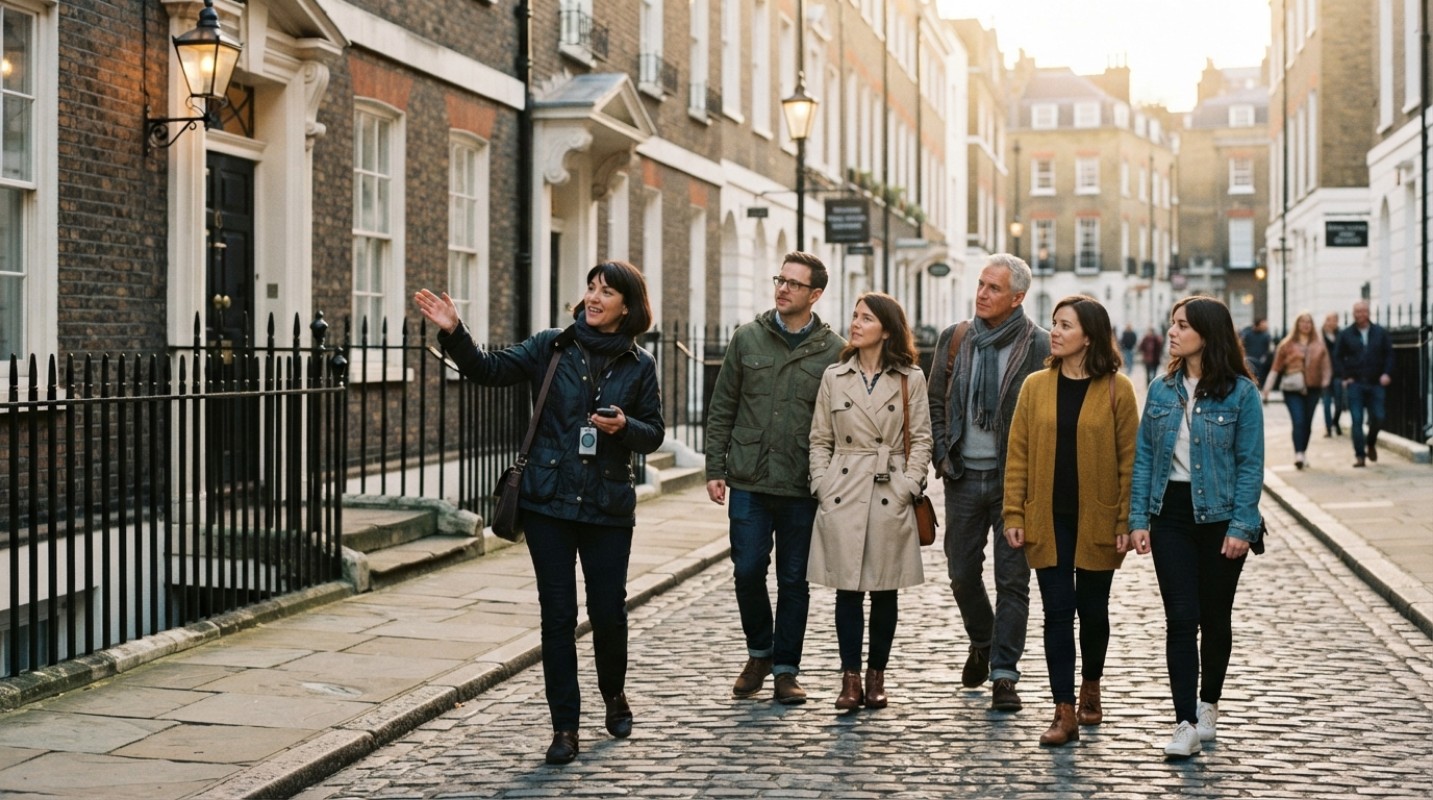
Guided Walking Tours London give visitors a structured route through a city’s streets, paired with commentary that connects buildings, events, and neighbourhoods into a coherent narrative. Unlike self-guided wandering, a tour led by a qualified guide can draw on formal training and, in some cases, access rights that independent visitors do not have.
What Makes a Guided Walking Tour Different
A walking tour is shaped by pacing, access, and interpretation rather than distance covered. Three factors separate a well-run tour from a casual stroll with a map:
- Route planning: a guide sequences stops so that context builds logically, rather than jumping between unrelated sites.
- Site access: some buildings and institutions restrict guiding rights to accredited professionals.
- Narrative depth: a trained guide connects historical detail to the physical surroundings in real time, rather than reciting disconnected facts.
In London specifically, guiding qualifications matter more than in many cities because several major attractions only permit certain guides to lead groups inside. According to a guide to Blue Badge guiding in London, institutions such as Westminster Abbey, the Tower of London, and the Houses of Parliament grant formal guiding rights only to Blue Badge holders, meaning a guide without that credential cannot lead commentary inside those buildings even if visitors can enter independently.
Blue Badge Guiding and Why It Matters Locally
The Blue Badge qualification is administered by the Institute of Tourist Guiding and is widely regarded as the standard professional credential for guiding in the UK. Guides who hold it have typically completed structured training covering history, architecture, and site-specific protocol before being authorised to lead groups through restricted locations.
This distinction is practical rather than symbolic. A Blue Badge guide can bring a group into certain sites and provide live, in-person commentary, while a non-qualified guide is limited to guiding outside those buildings only, even on an otherwise similar themed walk.
Based in UK, Carol Howard Tours serves visitors exploring London on foot, offering themed walks built around specific historical and cultural interests rather than a single fixed route.
Common Themes Covered on Walking Routes
Themed walking tours typically group stops around a subject rather than a strict geographic boundary. Examples of themes that appear across London’s guided walking circuit include:
- Literary history, tracing locations linked to specific authors or works.
- Legal and institutional London, covering areas tied to the courts and professional history.
- Film and television locations, connecting modern productions to real streets.
- Neighbourhood-focused walks through specific districts such as Greenwich or Chelsea.
Comparing Walking Tours to Other Sightseeing Formats
Choosing between a walking tour, a bus tour, or independent sightseeing depends on pace, access, and how much context a visitor wants layered onto the experience.
| Format | Pace | Site Access | Commentary Depth |
| Guided walking tour | Slow, street-level | Can include restricted sites with qualified guide | High, continuous narrative |
| Hop-on hop-off bus | Fast, route-based | Exterior views only | Limited, recorded commentary |
| Independent sightseeing | Visitor-controlled | Standard public access only | None, self-directed |
Each format serves a different purpose. A walking tour suits visitors prioritising detail and access, while a bus route suits those covering distance quickly across a wider area of London.
Frequently Asked Questions
Are guided walking tours suitable for first-time visitors? Yes. A structured walk helps orient visitors to a city’s layout while providing historical context that independent sightseeing does not include.
Do all guides have the same level of access to major sites? No. Access to certain restricted buildings is limited to guides holding the Blue Badge qualification, as outlined by the Institute of Tourist Guiding’s accreditation system.
Can walking tours be tailored to a specific interest, such as literature or film? Many guides offer themed routes built around a particular subject, allowing visitors to focus a walk on one area of interest rather than a general overview.
How long does a typical guided walking tour last? Durations vary by route and provider, though themed walks commonly run for a few hours depending on the number of stops and the pace set by the guide.
Planning a Walking Route
Selecting a walking tour comes down to matching a guide’s specialisation, language options, and access credentials to a visitor’s interests and schedule. Confirming a guide’s qualification status beforehand helps set expectations about which sites can be included on the route.
Current listing information for Carol Howard Tours is available for reference regarding themed walking routes across London.