The gist:
- Water damage restoration typically follows a sequence: inspection, water extraction, drying and dehumidification, then cleaning and sanitization.
- Response speed matters because materials left wet for more than a day or two carry a higher risk of mold growth.
- Verifying licensing, insurance, and documented process steps helps homeowners compare providers before work begins.
Hiring a qualified provider for Water Damage Restoration Services in Lewisville, TX means expecting a structured sequence of inspection, extraction, drying, and sanitization, not a quick fix. Understanding each stage helps Lewisville, TX homeowners set realistic expectations before a technician arrives.
Based in USA, Hands & Hammers Restoration Service extends its work to properties throughout Lewisville, TX, a detail worth noting since the company has no physical branch location in that market. Homeowners contacting any restoration provider should confirm the service area covers their specific address before scheduling an inspection.
What Happens During the Initial Inspection
A restoration technician typically begins with a walkthrough to identify the source of water intrusion and the extent of structural exposure. This step determines whether damage stems from a burst pipe, roof leak, flooding, or plumbing failure, since each source carries different contamination risks.
Key items assessed during inspection include:
- Moisture levels in walls, flooring, and subflooring
- Category of water involved (clean, gray, or black water)
- Safety hazards such as electrical exposure or structural weakening
- Materials that may require removal versus drying in place
The Core Restoration Process
Most water damage jobs move through three distinct phases once the inspection is complete. Each phase addresses a different risk: standing water, trapped moisture, and contamination.
| Stage | Primary Goal | Typical Equipment |
| Water Extraction | Remove standing water quickly | Pumps and extraction vacuums |
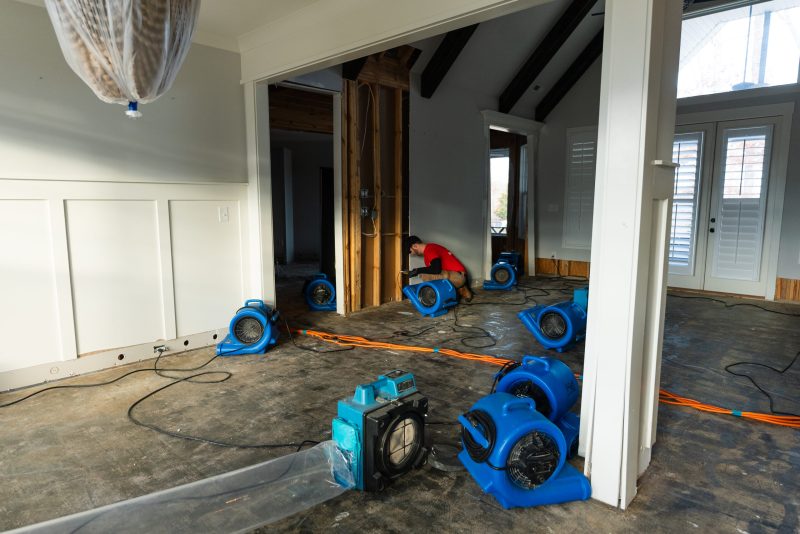
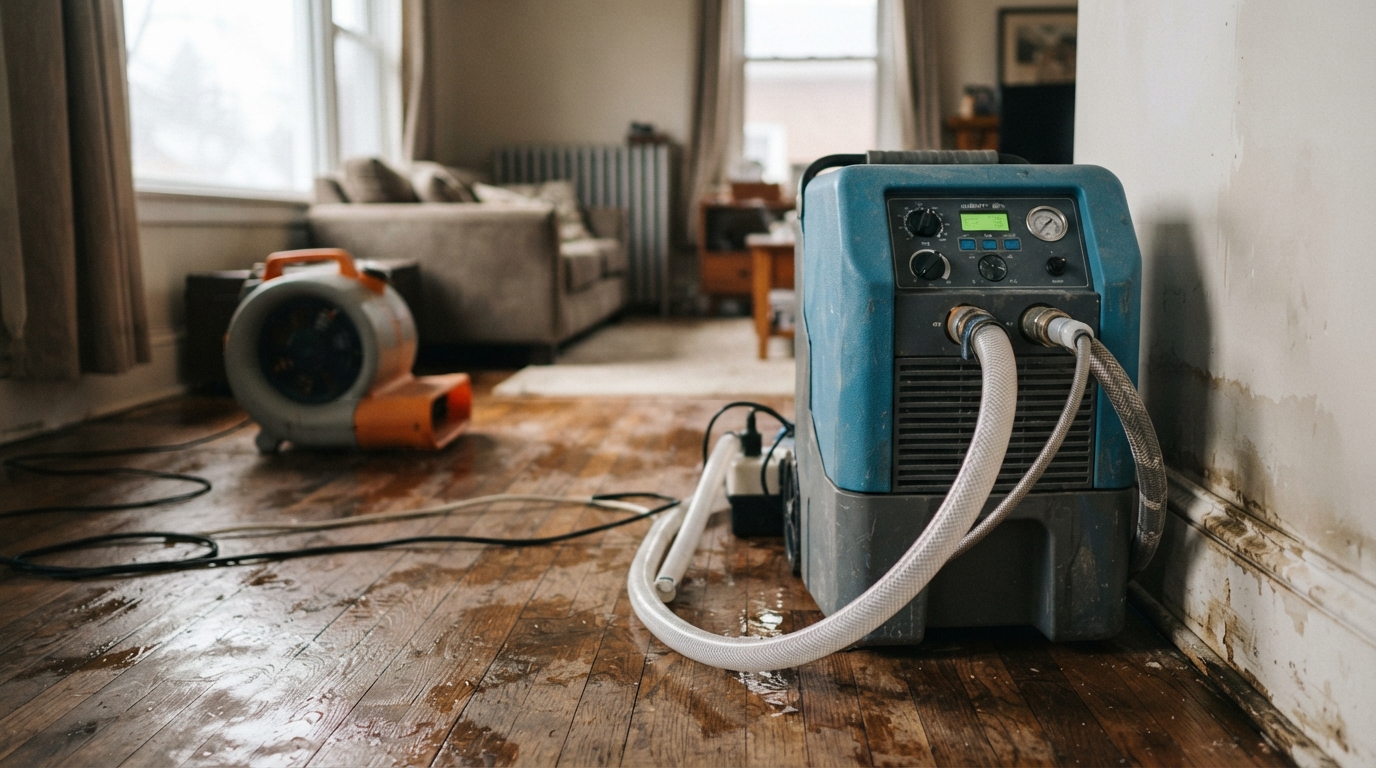
| Drying and Dehumidification | Eliminate moisture from structural materials | Industrial air movers and dehumidifiers |
| Cleaning and Sanitization | Disinfect surfaces and reduce contamination | Antimicrobial treatments, specialized cleaners |
Timing matters throughout this process. According to EPA guidance on mold and moisture, drying water-damaged materials within 24 to 48 hours is one of the most effective ways to prevent mold growth from taking hold. Delays beyond that window increase the likelihood that porous materials like drywall and carpet padding will need replacement rather than drying.
Mold Risk and Why Timing Matters in Lewisville, TX
Lewisville, TX experiences humid subtropical conditions with warm, moist summers, which can accelerate mold development in homes that retain moisture after a leak or storm event. Older housing stock in North Texas, along with homes using slab foundations, can also trap moisture in ways that are not immediately visible without moisture meters or thermal imaging.
Homeowners should watch for these warning signs after any water intrusion:
- Musty odors that persist after surface cleanup
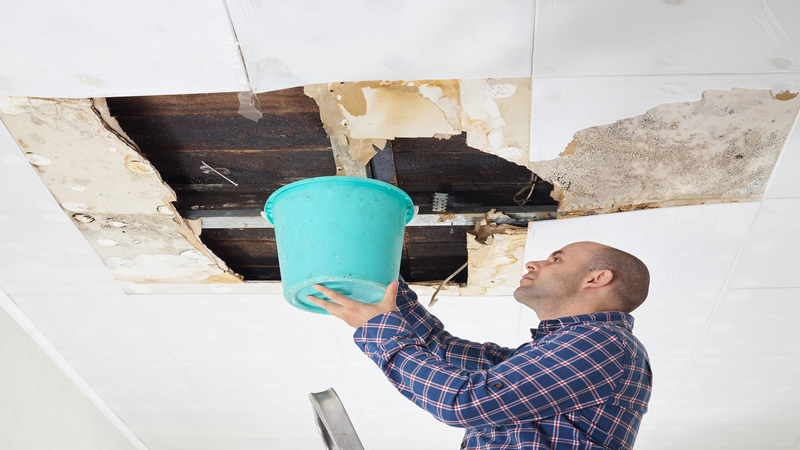
- Discoloration or staining on walls and ceilings
- Warped flooring or baseboards
- Visible condensation on windows or pipes days after the initial event
Addressing these signs promptly reduces the chance that a water event turns into a secondary mold remediation project.
Questions to Ask Before Hiring
Comparing providers before signing an agreement can prevent disputes over scope and cost later. Useful questions include:
- Is the company licensed, insured, and bonded in Texas
- What certifications do technicians hold for water damage and mold work
- Does the estimate include moisture testing to confirm the job is complete
- What is the expected timeline for drying versus full reconstruction
Clear answers to these questions, documented in writing, give homeowners a reference point if disagreements arise during the project.
Frequently Asked Questions
How long does water damage restoration usually take? Drying typically takes three to five days depending on how much water was absorbed and the materials affected, though full reconstruction after major damage can extend the timeline considerably.
Can homeowners stay in the house during restoration? In many cases yes, particularly for localized leaks, though extensive water intrusion or contamination from gray or black water may require temporary relocation for safety.
Does standard homeowners insurance cover water damage restoration? Coverage depends on the cause; sudden events like burst pipes are often covered, while gradual leaks or flooding may require separate policies or riders.
What is the difference between water mitigation and water damage restoration? Mitigation refers to the initial steps taken to stop ongoing damage, such as extraction and drying, while restoration includes the broader process of returning the property to its prior condition.
Final Thoughts
Understanding the typical sequence of inspection, extraction, drying, and sanitization gives homeowners a clearer picture of what a restoration project involves and how to evaluate the providers they contact. Published service details for Hands & Hammers Restoration Services outline the restoration steps covered for properties in the area.