Short answer:
• Heavy-duty fleet transmission service protects drivetrain components through scheduled fluid changes, filter replacement, and inspection based on mileage, duty cycle, and OEM specifications.
• Commercial transmission intervals generally fall between 50,000 and 100,000 miles, though severe duty cycles shorten that window.
• Federal rules require documented maintenance programs for all commercial motor vehicles, making scheduled transmission care a compliance matter as much as a mechanical one.
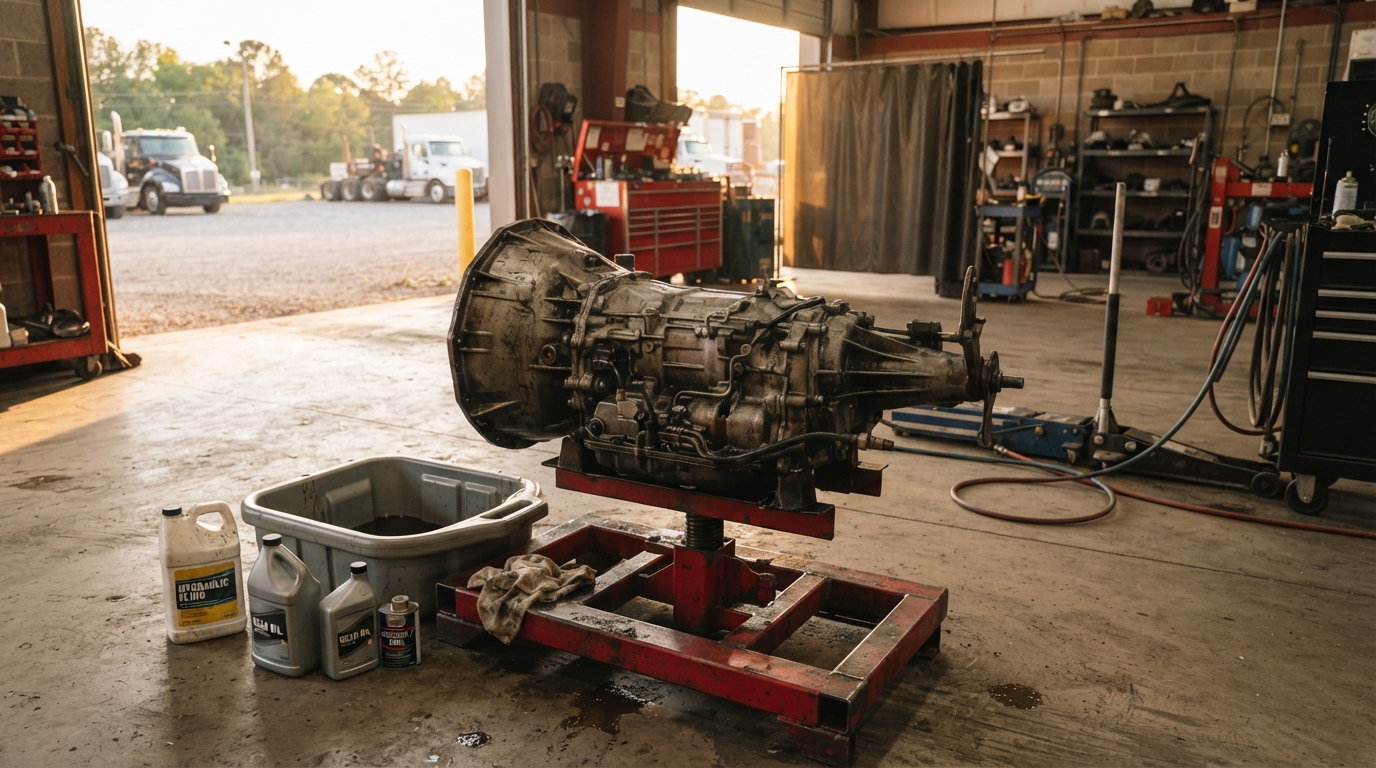
Fleet transmissions endure constant load cycling, frequent stops, and temperature swings that wear components faster than in passenger vehicles. A properly scheduled Heavy-Duty Fleet Transmission Service reduces the likelihood of unplanned downtime and helps extend the working life of drivetrain components across a mixed fleet of trucks and commercial vehicles.
Fleet operators in Monroe, LA manage a mix of regional delivery trucks, construction equipment, and long-haul tractors, each with different duty cycles that affect how often transmission service is needed. Matching service intervals to actual operating conditions, rather than relying on a single generic schedule, is one of the more practical steps a fleet manager can take to limit repair costs.
What Heavy-Duty Transmission Maintenance Actually Involves
A commercial transmission service typically covers more than a simple fluid drain. Technicians inspect for contamination, check for proper fluid level and condition, and verify that internal components are operating within tolerance.
Core tasks generally include:
• Draining and replacing transmission fluid to OEM specification
• Replacing or cleaning the transmission filter
• Inspecting seals, gaskets, and the pan for leaks or metal shavings
• Checking shift quality and linkage adjustment on manual units
• Documenting fluid condition and mileage for maintenance records
Trucks used for stop-and-go city routes or heavy hauling place more stress on transmission fluid than line-haul operations, which is why duty cycle matters as much as the odometer reading.
How Often Should Fleet Transmissions Be Serviced
Service intervals vary by transmission type and how the vehicle is used day to day. According to a 2026 preventive maintenance guide, transmission fluid requires weekly visual inspection for contamination or burnt odor, with service intervals typically ranging from 50,000 to 100,000 miles depending on transmission type and duty cycle. Automatic units in demanding applications tend to need attention sooner than manual transmissions used in steadier line-haul work, as automatic transmissions in severe service require more frequent attention than manual transmissions in line-haul applications.
Fluid type also changes the equation. Synthetic transmission fluids hold up under higher heat loads and can extend service intervals compared to conventional fluid, which tends to degrade faster under sustained thermal stress.
| Fluid Type | Thermal Tolerance | Typical Service Interval |
| Synthetic | Stable up to roughly 300°F | Extended intervals, up to several hundred thousand miles in some applications |
| Conventional | Degrades faster above roughly 250°F | Shorter intervals, generally under 250,000 miles |
Because specifications differ by manufacturer and transmission model, verifying the fluid spec and drain interval against the OEM service manual remains the most reliable approach for any given unit.
Compliance and Recordkeeping Considerations
Transmission maintenance is not only a mechanical concern for fleets operating commercial motor vehicles. Federal rules require documented upkeep of these systems, and the FMCSA’s motor carrier safety regulations establish the inspection, repair, and maintenance obligations that apply to transmissions along with other vehicle systems.
Fleet managers should keep records that show:
1. Vehicle identification details for each commercial unit
2. Dates, mileage, and type of fluid used for each transmission service
3. Condition notes on fluid drained, including any metal contamination
4. A documented preventive maintenance schedule tied to mileage or engine hours
Retaining these records supports both operational planning and audit readiness, since inspectors may request service history during a roadside or facility review.
Frequently Asked Questions
How does duty cycle affect transmission service intervals? Vehicles used for stop-and-go routes or heavy loads generate more heat and shear stress on transmission fluid than steady highway driving, which typically shortens the recommended service interval.
Can switching to synthetic fluid reduce maintenance frequency? Synthetic fluids generally resist heat breakdown better than conventional fluid, which can allow longer intervals between services, though the OEM specification for the transmission model should still guide the final interval.
What records should a fleet keep for transmission service? Fleets should document fluid type, mileage, service date, and fluid condition for each unit, consistent with federal recordkeeping expectations for commercial motor vehicle maintenance.
Does Monroe, LA weather affect transmission service needs? Seasonal heat and humidity in the region can accelerate fluid breakdown in vehicles that idle frequently or haul heavy loads, making regular fluid condition checks a practical part of a local maintenance routine.
Service Availability
Based in USA, Twin City Transmission Service serves customers across Monroe, LA with transmission repair work dating back to 1961.
Fleet managers researching preventive schedules and fluid specifications can find additional detail by visiting the page for Learn More About Heavy-Duty Fleet Transmission Services, which outlines service options for commercial operators in the region.


