In brief:
• Indoor plants support better air circulation, add humidity, and can soften the visual and acoustic feel of a room.
• Research on houseplants and air quality is mixed, so plants work best as one part of a broader home health strategy, not a replacement for ventilation.
• Selecting the right species for Miami’s humidity and light conditions matters more than simply adding greenery.
Indoor plants contribute to a healthier home mainly through modest improvements in humidity, perceived air freshness, and stress reduction, rather than acting as a stand-alone air purification system. For households weighing whether greenery is worth the effort, understanding what Indoor Plants can realistically do indoors helps set accurate expectations before buying pots and soil.
Interest in houseplants surged after a widely cited 1989 study, but the science has evolved since then. A 2019 meta-analysis from Drexel University researchers found that potted plants do not meaningfully improve indoor air quality, based on a review of 196 measurements from 12 studies converted into a common clean air delivery rate metric. The same analysis noted that matching the air-cleaning effect of opening a single window for five minutes would require roughly 680 plants in an average room. That does not mean plants are useless indoors; it means their benefits are smaller and different than often assumed.
What Indoor Plants Actually Change at Home
Current research points to a narrower but still meaningful set of benefits.
• Humidity support : A transpiring plant releases water vapor from its leaves, and a cluster of large-leaved plants can raise local humidity by 5 to 10 percent, though a humidifier does more.
• Oxygen and carbon dioxide : Oxygen production from a houseplant is real but small, roughly the equivalent of one to two human breaths per hour during the day, and plants photosynthesize carbon dioxide in daylight but respire it at night, making the net effect over 24 hours essentially neutral.
• Dust and particulates : Leaves trap a minor amount of dust, though a HEPA filter is far more effective.
• Mood and comfort : Greenery is frequently linked to a calmer, more pleasant indoor atmosphere, even when its measurable chemical filtering effect is limited.
These findings matter for Miami households because of the local climate. According to the University of Florida IFAS Extension, plants are often described as nature’s air filter because they convert carbon dioxide into oxygen, which can be a useful complement to the mechanical ventilation and air conditioning systems that run constantly in South Florida’s humid, air-conditioned housing stock.
Choosing Plants That Suit Miami Conditions
Light exposure and humidity tolerance determine which species thrive indoors in this region.
| Light Level | Example Plant Types | Typical Placement |
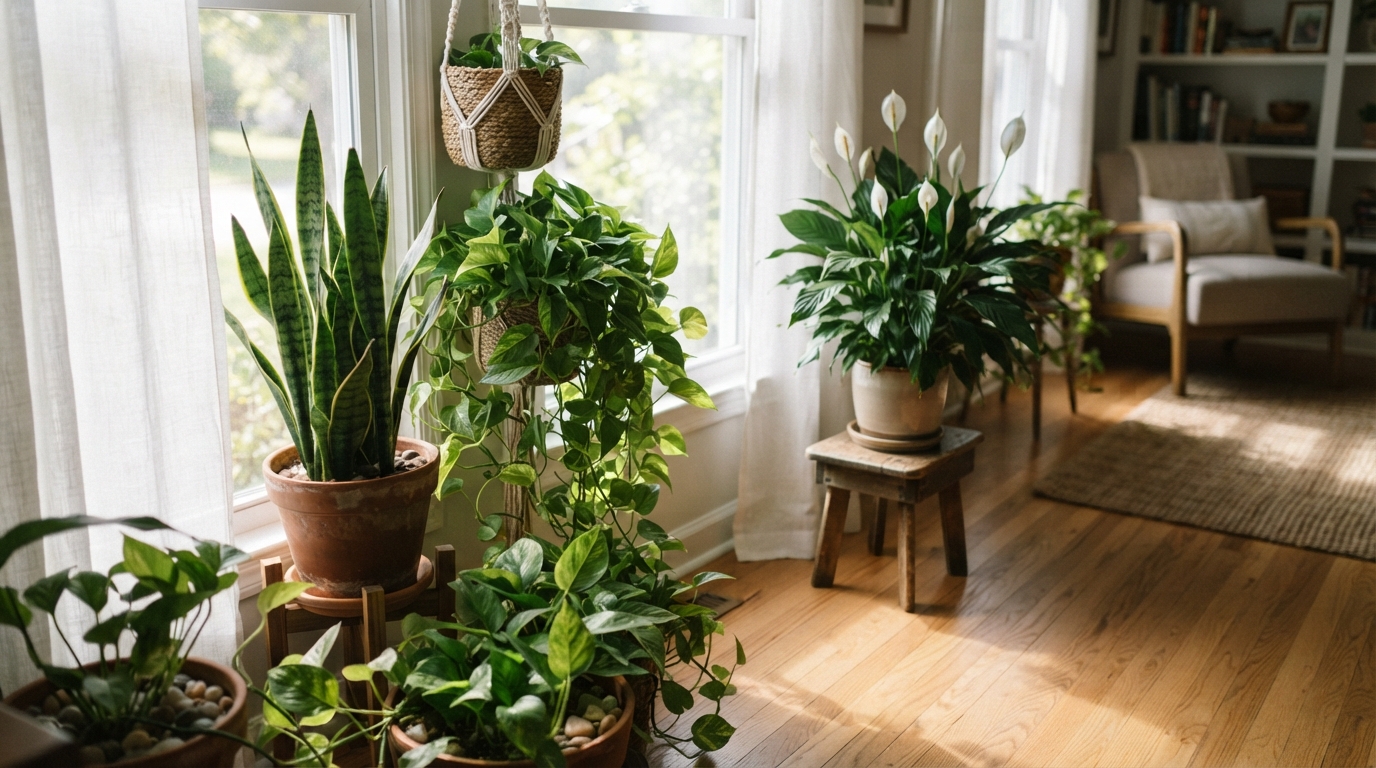
| Low light | Snake plant, Spathiphyllum | Interior rooms, hallways |
| Medium light | Pothos, dracaena | Rooms with filtered window light |
| High light | Orchids, bird of paradise | South-facing windows, sunrooms |
Matching plant type to available light reduces the need for frequent replacement, a common issue in homes with heavy air conditioning or limited natural light.
Maintenance Realities for South Florida Homes
Humidity, pests, and air conditioning cycles all affect how indoor plants perform locally.
1. Consistent indoor humidity from air conditioning can dry out tropical species faster than expected.
2. South Florida’s pest pressure, including mites and fungus gnats, can move indoors through open doors and vents.
3. Overwatering remains a common problem in homes where humidity already feels high.
Professional plant leasing and maintenance services exist in the Miami area for households or offices that prefer scheduled care over self-management. Based in Miami, FL, Tropical Plant Leasing provides plant leasing, outright purchase, and maintenance options to customers across Miami, including guaranteed replacement of plants that decline.
Frequently Asked Questions
Do indoor plants really clean the air at home? Modern research shows the effect is modest. The Drexel meta-analysis found VOC removal from typical houseplant densities is negligible compared to standard building ventilation.
How many plants would be needed to notice an air quality difference? Based on the clean air delivery rate findings, hundreds of plants per room would be required to match basic ventilation, which is impractical for most homes.
Which indoor plants handle Miami’s humidity best? Low and medium light tropical species such as snake plants, pothos, and Spathiphyllum generally tolerate Miami’s humidity and indoor air conditioning well.
Is leasing plants different from buying them outright? Leasing typically includes regular maintenance and replacement as part of a monthly arrangement, while outright purchase shifts ongoing care to the owner, often with a basic care guide provided.
Information about plant leasing and maintenance options in the area, including Tropical Plant Leasing, is published for residents comparing indoor plant care arrangements.