In short:
• A successful build depends on soil testing, permitting, base preparation, and correct plumbing and electrical integration, not just the pool model chosen.
• Fiberglass installation timelines in Louisiana typically run faster than concrete because the shell arrives pre-manufactured.
• Local soil, drainage, and parish permitting rules in Lafayette, LA directly affect scheduling and long-term pool performance.
A well-executed swimming pool construction project depends on site conditions, permitting, and installation sequencing working together, not on any single design choice. When soil testing, base preparation, and plumbing integration are handled correctly, the finished pool holds up better against shifting ground and seasonal moisture changes common across south Louisiana.
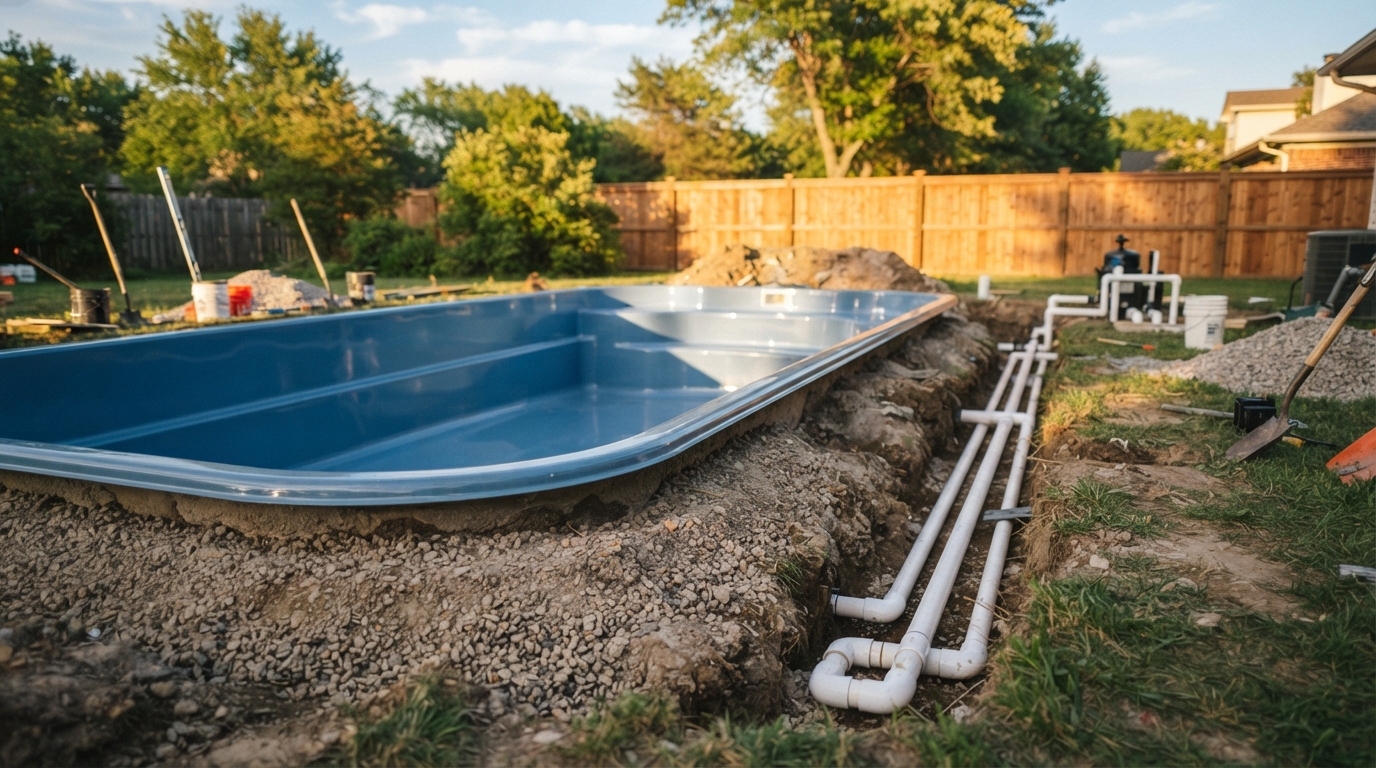
Swimming Pool Construction begins long before a shell or form arrives on site. Builders first evaluate the yard’s soil composition, drainage patterns, and utility line locations, since these factors determine where excavation can safely occur and how the base must be engineered. In parishes with heavy clay soil, this groundwork step often carries more weight than the pool model itself.
Soil, Drainage, and Permitting in Lafayette, LA
Soil behavior and permitting requirements vary across south Louisiana, which makes local knowledge relevant to how a project unfolds in Lafayette, LA
• Clay soil and groundwater movement : Expansive clay can shift with moisture changes, so a stable gravel base is typically required before any shell or structure is set.
• Parish-level permits : Louisiana handles pool permitting at the parish level rather than through a single statewide process, and most parishes require a building permit before excavation starts , with some adding separate electrical permits and staged inspections.
• Drainage rules : Runoff from a new pool cannot be allowed to affect neighboring properties, which influences where backfill and grading occur.
Builders working across Calcasieu, Acadia, and Lafayette Parishes often cite drainage and clay-soil conditions as recurring challenges that shape excavation and base design decisions.
Installation Sequence That Affects Long-Term Performance
Regardless of pool type, construction follows a defined order of operations. Skipping or rushing any stage increases the risk of shell movement, plumbing failures, or code violations later.
1. Site layout and permitting – marking the footprint, confirming setbacks, and securing required permits before any digging begins.
2. Excavation and base preparation – digging to the shell’s dimensions and compacting a crushed-stone base to prevent shifting.
3. Shell placement or structural forming – setting and leveling the pool structure with precise alignment.
4. Plumbing and electrical integration – connecting skimmers, returns, pumps, filters, and bonding systems under code-compliant wiring.
5. Backfill and water fill – balancing internal water pressure against external backfill to avoid wall distortion.
6. Decking, coping, and barrier installation – finishing the surrounding surface and safety fencing.
7. Final inspection and startup – confirming code compliance and balancing water chemistry before use.
Comparing Build Timelines and Site Demands
|
Factor |
Fiberglass Installation |
Traditional Poured Construction |
|
Typical timeline |
Weeks rather than months, since the shell arrives pre-manufactured |
Often several months due to on-site forming and curing |
|
Soil sensitivity |
Base preparation still required, but shell flexes with ground movement |
Higher sensitivity to clay shifting without reinforced engineering |
|
On-site disruption |
Shorter excavation and backfill window |
Extended excavation, forming, and curing period |
|
Permitting steps |
Same parish-level permits apply regardless of method |
Same parish-level permits apply regardless of method |
Safety Barriers and Code Compliance
Every finished pool, regardless of construction method, must meet enclosure requirements before it can legally hold water for use. The CPSC safety barrier guidelines describe recommended fence heights, gate self-latching mechanisms, and maximum gap clearances intended to reduce drowning risk among young children. Local parish codes typically incorporate similar minimum fence heights and self-closing gate requirements as part of final inspection sign-off.
Pool contractors serving the region extend their installation work into Lafayette, LA, applying the same soil evaluation and permitting steps across both markets.
Frequently Asked Questions
How long does a fiberglass pool installation typically take in Louisiana? Fiberglass projects generally move faster than poured construction because the shell is manufactured off-site, though exact timing depends on permitting, weather, and site access.
Why does soil type matter so much for pool construction? Clay-heavy soil common in parts of south Louisiana can shift with moisture, so base preparation and backfill technique directly affect long-term shell stability.
Are pool safety barriers legally required? Barrier requirements are set at the parish or municipal level rather than by a single federal law, though most jurisdictions require fencing and self-latching gates before final inspection approval.
Does the permitting process differ between parishes? Yes, Louisiana permitting is handled parish by parish, so requirements in one area may not match those in a neighboring parish.
Business Info
Fiberglass pool installation services covering Lake Charles, LA and the surrounding region, including Lafayette, LA, are detailed through Crown Pools, which outlines model options and service parish coverage.
Published profile information for Crown Pools includes service area details relevant to planning a pool project in the region.


