In brief:
• BBQ trailers are a practical, mobile solution for outdoor food service at events, competitions, and roadside operations in Hurley, MS.
• Choosing the right trailer size, layout, and equipment is the key to consistent, high-volume service.
• Custom-built units designed around your specific menu and workflow outperform off-the-shelf alternatives.
A well-configured BBQ trailer lets operators serve large crowds efficiently without sacrificing food quality or consistency. For anyone planning outdoor food service in the Hurley area, understanding how trailer design, layout, and compliance requirements connect is the first step toward a functional operation.
Choosing the Right BBQ Trailer for Your Operation
BBQ smoker trailers range from smaller models to large gooseneck units, with size depending on how much food you plan to cook and serve. Larger trailers are ideal for high-volume events, while smaller trailers work well for local vending and competitions.
The intended use case should drive every sizing decision. A roadside setup serving a neighborhood crowd has very different capacity needs than a catering rig deployed at a county fair or corporate event. Getting this wrong early adds cost and limits flexibility later.
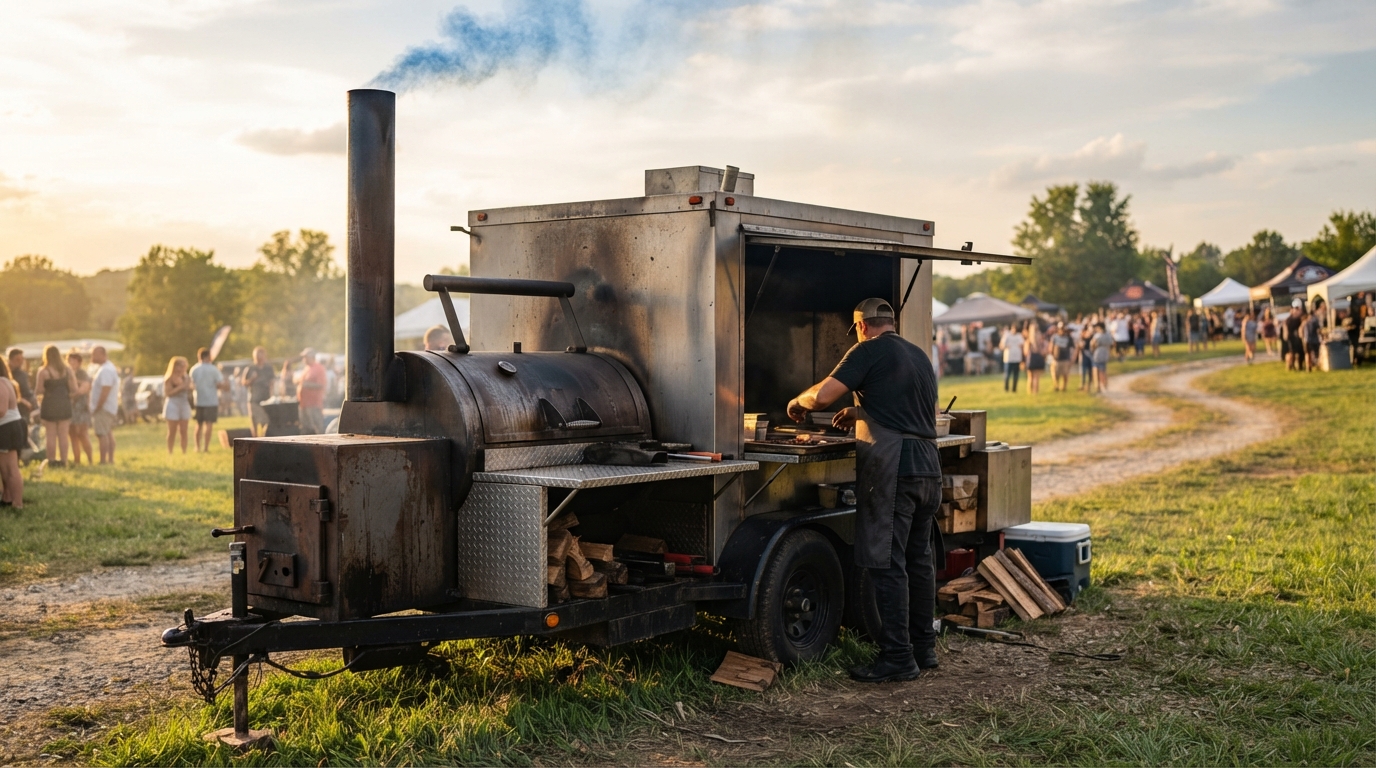
BBQ smoker trailers are commonly used for catering, competitions, festivals, and roadside BBQ sales, allowing operators to cook large quantities of meat consistently. These trailers are designed for durability and heavy use.
When sourcing bbq trailers Hurley, MS, buyers should prioritize units built for commercial output rather than recreational use. The structural and thermal demands of a full-day service shift are substantially higher than a backyard cook.
Layout Features That Drive Service Efficiency
Trailer layout is where operational efficiency is won or lost. A poorly arranged interior forces unnecessary movement, slows throughput, and increases the risk of cross-contamination during peak service periods.
Smoker trailers can include prep counters, storage, and refrigeration, which improve workflow and reduce the need for additional equipment. Layouts are designed for safe and efficient operation, and prep space is especially useful for catering and large events.
Key interior features to evaluate before purchasing or ordering:
• Stainless steel prep surfaces for sanitation and durability
• Commercial-grade exhaust hoods to manage smoke and heat
• On-board refrigeration to keep proteins at safe temperatures
• Dedicated serving windows for fast, organized customer flow
• Adequate storage for wood, fuel, and dry goods
There are many different levels of catering, some involving simply serving food prepared off-site while others require all or most cooking to be performed on-site. The scale of the operation, the type of affair being catered, the sort of food offered, and the venue are factors that determine the capabilities needed. Regardless, the common denominators are nearly always speed and efficiency, meaning sufficient equipment, ample counter space, and numerous serving windows at a minimum.
Compliance and Food Safety Basics for Mobile BBQ Units
Operating a BBQ trailer involves more than cooking great food. Regulatory compliance is a non-negotiable part of running a mobile food business. The Association of Food and Drug Officials maintains detailed state-specific regulations and requirements for operating mobile food establishments, covering licensing, safety, and facility standards.
At the state and local level, operators should confirm the following before their first service day:
1. Mississippi Department of Health mobile food vendor permit
2. Local county health department inspection and approval
3. Fire safety compliance, including suppression systems where required
4. Commissary agreement if the trailer lacks full self-sufficient water and waste systems
5. Sales tax registration for food sales
The FDA advises that cold food should be stored at 40 degrees Fahrenheit or below to prevent bacterial growth — a standard that applies directly to any refrigerated storage built into a BBQ trailer. Protein handling at outdoor events in Mississippi’s climate makes temperature control a priority, not an afterthought.
BBQ Trailer Size Comparison
Choosing the right unit type depends on your service volume and mobility needs. The table below outlines common configurations:
|
Trailer Type |
Typical Size |
Best For |
|
Bumper-pull smoker |
7×10 ft to 20 ft |
Local vending, competitions |
|
Mid-size trailer |
20-30 ft |
Festivals, catering events |
|
Gooseneck unit |
30 ft and above |
High-volume commercial service |
Trailers range from a 7×10 ft bumper-pull up to an 8.5×53 ft gooseneck, and if a unit is longer than 30 ft, a gooseneck configuration is suggested. Tow vehicle capacity must match trailer weight, so confirming those specifications before purchase avoids costly mismatches on the road.
Frequently Asked Questions
What types of events are BBQ trailers commonly used for? Carnivals, street fairs, sporting events, rodeos, and swap meets are all practical opportunities for operators running a BBQ smoker trailer.
Can a BBQ trailer be customized for a specific cooking style? Just about every BBQ operator has a process that is a little different from others, which often means they want their smoker trailer set up in a particular way. Custom-built units allow the customer to be involved in the design process to get the configuration they need.
Are used BBQ trailers a viable option for new operators? Used concession trailers may be available depending on inventory and are often ideal for startups looking to reduce initial costs.
What tow vehicle is needed for a larger BBQ trailer? Generally, a half-ton vehicle works for trailers under 20 ft, while a three-quarter-ton to one-ton vehicle is required for 20 ft and above.
Ready to plan your outdoor BBQ food service setup? All trailers from Russell Ventures, LLC are built in Lucedale, MS and serve customers throughout Mississippi, including Hurley, MS, with local manufacturing allowing better quality control and direct communication during the build. Contact the team to discuss your menu, volume needs, and service goals before committing to a unit size or layout.