Quick take:
• Aluminum railing installation improves fall safety and meets code-required guard heights while needing almost no annual upkeep.
• US building codes generally require residential guards at 36 inches and commercial guards at 42 inches, per the International Residential Code.
• A proper installation checklist covers height, baluster spacing, structural anchoring, and finish durability before any final inspection.
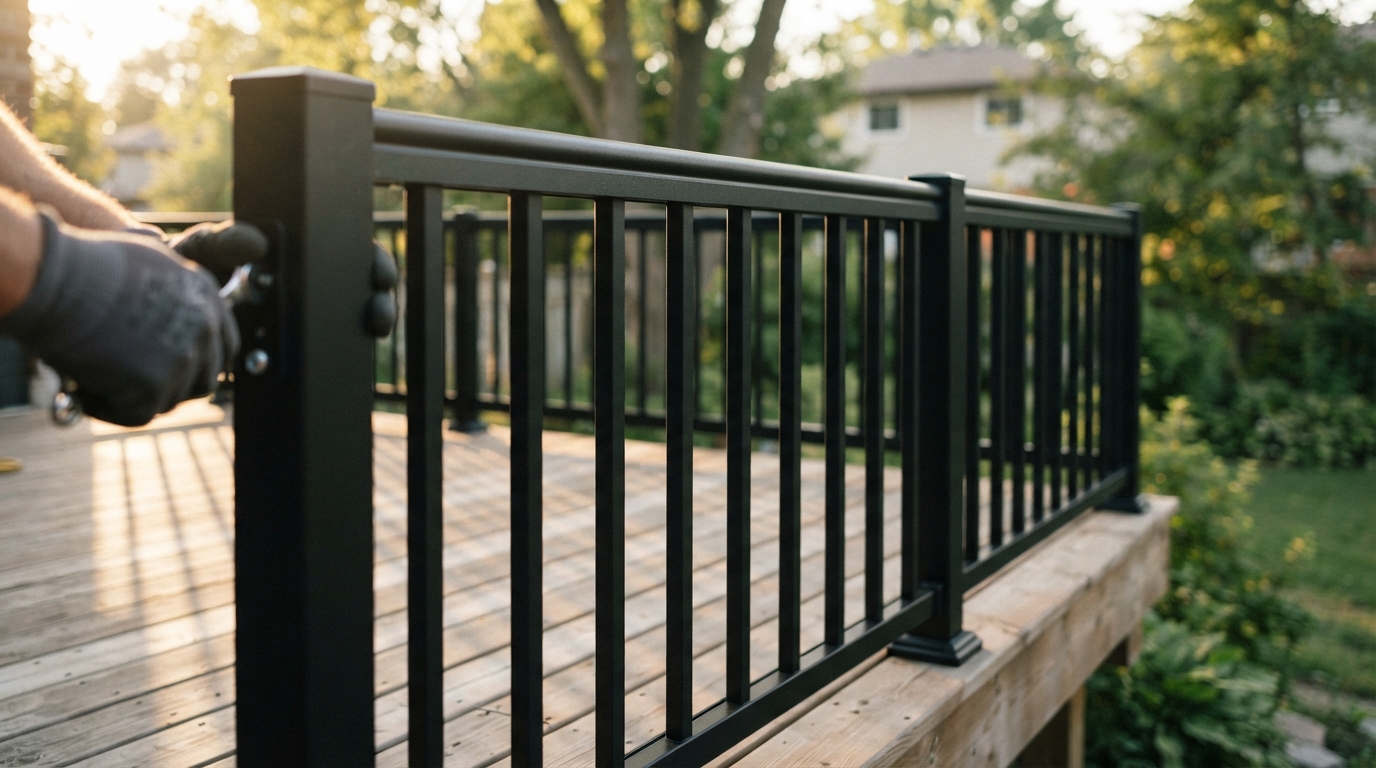
Homeowners researching aluminum railing installation typically want to know whether the material meets safety codes and how it compares to wood or cable alternatives for long-term durability. The short answer: aluminum railing systems meet or exceed most US guard height and load requirements while resisting rust, rot, and weather damage better than traditional wood railings.
Choosing a qualified installer matters as much as the material itself, since fit, anchoring, and spacing determine whether a railing actually passes inspection. Aluminum Railing Installation Calgary AB projects follow the same core safety logic used across North America: a railing is only as reliable as its weakest connection point, regardless of how attractive the finish looks.
Why Aluminum Railings Are Gaining Ground
Aluminum has become a preferred guardrail material for decks, balconies, and stairs because it balances strength with low maintenance demands.
• Resists corrosion, chipping, and fading compared to untreated wood or steel.
• Requires only occasional washing rather than sanding, staining, or repainting.
• Holds up against freeze-thaw cycles and heavy snow loads common in northern climates.
• Offers consistent factory-welded joints that reduce the risk of loosening over time.
These properties make aluminum a practical choice for regions with harsh winters, where wood railings often need repair within a few seasons.
Safety Checklist Before and During Installation
A code-compliant railing installation depends on several measurable factors, not just visual appeal. Use this checklist to evaluate any aluminum railing project:
1. Confirm guard height requirements. Under the IRC, residential guards are required when the deck surface is 30 inches or more above grade, with a minimum height of 36 inches. Commercial and multi-family applications require a minimum guard height of 42 inches, covering apartment balconies, restaurant patios, and commercial rooftops.
2. Check baluster and gap spacing. Interior sections of the rail should not have openings large enough to pass a 4 inch diameter sphere through, except for the triangular stair opening, which allows up to a 6 inch sphere.
3. Verify structural load rating. Guardrails must be strong enough to withstand a concentrated 200 lb force anywhere along the top of the rail.
4. Inspect anchor points and mounting style. Confirm posts are rated for the surface material, whether concrete, wood, or steel framing.
5. Review finish quality. Powder-coated aluminum should resist chipping and UV fading across seasonal temperature swings.
6. Schedule a final code inspection. Local jurisdictions can amend height or spacing rules, so confirming with a local inspector avoids rework. For general reference on load and height standards, the International Code Council guidelines outline how these requirements are adopted across US jurisdictions.
Skipping any one of these steps is a common reason installations fail inspection on the first attempt.
Aluminum vs. Other Railing Materials
|
Feature |
Aluminum |
Wood |
Cable |
|
Maintenance |
Low, occasional washing |
High, annual staining or sealing |
Moderate, periodic tensioning |
|
Weather resistance |
Strong against rust and freeze-thaw |
Prone to rot and warping |
Strong, but cables can stretch |
|
Code compliance ease |
Factory-welded, consistent spacing |
Spacing varies by build quality |
Requires careful cable spacing checks |
|
Typical lifespan context |
Long-lasting with minimal upkeep |
Shorter without regular care |
Durable with proper tensioning |
This comparison highlights why many homeowners weigh long-term maintenance costs as heavily as upfront material price.
Choosing a Qualified Installer
Not every contractor fabricates railings to the same tolerance, and fit quality affects both safety and appearance. Ask prospective installers whether railings are custom-welded in-house or assembled from generic stock parts, since custom fabrication generally allows tighter tolerances for uneven decks or stairs. Confirm the installer provides documentation or shop drawings before work begins, so the final structure can be verified against local code during inspection.
Sundeck Solutions Inc. has operated in the decking and railing space since 2005, specializing in custom-welded aluminum railings alongside vinyl decking for residential and commercial clients. The company’s aluminum systems are fabricated and powder-coated specifically to handle extreme seasonal weather, which is a relevant consideration anywhere freeze-thaw cycles and heavy snow loads are common.
Frequently Asked Questions
What is the minimum height for a deck railing in the US? Under the IRC, residential guards are required once the deck surface is 30 inches or more above grade, with a minimum height of 36 inches. Commercial properties generally require 42 inches.
Do aluminum railings need yearly maintenance? Aluminum railings typically need only periodic washing rather than sanding, staining, or repainting, which is one reason they are favored over wood in climates with harsh winters.
Can aluminum railings be installed on existing concrete or wood decks? Yes, provided the anchor points and mounting style match the supporting surface. A qualified installer should confirm the structure before fabrication begins so the finished railing meets load and spacing requirements.
How do I know if my railing passed inspection standards? Local inspectors check height, baluster spacing, and load resistance against adopted building codes. Requesting shop drawings or documentation from your installer before the project starts makes this verification easier.
Aluminum railing installation offers a practical balance of safety compliance, weather resistance, and reduced long-term upkeep compared to traditional materials. Reviewing code requirements, spacing rules, and installer credentials before starting a project helps homeowners avoid failed inspections and unnecessary rework. For projects in the Calgary area, Sundeck Solutions Inc. offers custom-welded aluminum railing fabrication built to withstand regional weather extremes.